
If you’re considering retraining or are about to leave school and are trying to decide what path to follow, becoming an electrician could be your passport to a rewarding role, excellent career prospects and strong earning potential.

Why become an electrician?
The UK is currently in the midst of a chronic shortage of skilled tradesmen, with professions such as electricians, plumbers and bricklayers in greater demand than ever. New homes are being built in their thousands but this pace isn’t being matched by the number of qualified workers plying their trade.
Newly qualified electricians who opt to work for an employer can typically expect to earn around £28,000 to £35,000 a year (industry JIB rates put the standard newly-qualified electrician rate at about £35,800 in 2026), with more in London and high-demand areas. These figures are approximate and indicative. After gaining more experience working in the industry, you can expect a higher salary.
Pay varies by region, with London and the South East typically at the top and other regions lower. Across the UK the median electrician salary is now around £39,000 (ONS, 2025), and experienced electricians often earn £40,000+. All figures here are approximate and indicative.
These figures are based on a median calculation, which means the average has not been skewed by a small number of high earners and reflects a realistic salary for most electricians. The approximate earnings spread (ONS ASHE 2025) runs from around £26,000 at the 10th percentile to around £55,000 at the 90th percentile.
As a result of the skills shortage, electricians are in high demand. A small number of highly experienced, self-employed or specialist electricians can earn well into the £60,000 to £70,000+ range, with rare outliers higher. It is also worth noting that apprentices earn a wage while they train: the statutory apprentice minimum wage rises to £8.00 an hour from April 2026, with higher JIB apprentice stage rates (roughly £15,900 rising to around £27,360 by stage 4). With continued strong demand for new homes, you can expect demand for electricians to increase even further, making qualifying as an electrician a financially rewarding and secure career path. (All salary figures are approximate and indicative. Last reviewed: June 2026.)
Download your free information pack
Find out how you could train as a domestic gas engineer by downloading a free copy of our information pack.
Picking a training path
If you’re considering training to become an electrician, you can choose one of three main options to obtain the necessary skills and qualifications.
- Start an apprenticeship (with NVQ or SVQ qualification)
- Study a diploma or technical certificate
- Take a domestic installer course
Once you’re qualified, there are a number of routes you can take, such as choosing to specialise in a particular field like machine repair or a particular industry, for example, agriculture or automotive.
You can expect to spend anything from a couple of weeks to a couple of years qualifying as an electrician. A domestic installer is the quickest route and takes just a few weeks. To be classed as a fully qualified electrician, you’ll need a combination of work experience and NVQ qualifications – if you are an apprentice you’ll do both of these concurrently, but it will take between two and four years to complete.
Please note that the regulations are different in Scotland, and the only training path to becoming an electrician is an SVQ Qualification. Further information on how to become an electrician in Scotland can be found on the SJIB website.
Becoming a fully qualified electrician
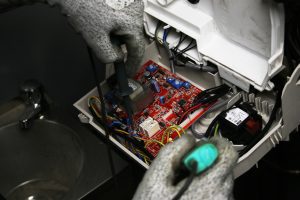
If you’re serious about making a career as an electrician and want the freedom to specialise in a particular field or industry, it’s well worth taking the time to become a fully qualified electrician. This is the most demanding of the career paths available to you as an electrician and will require you to obtain a certain level of training and successfully complete a number of assessments.
Beginning with an apprenticeship has traditionally been the most popular pathway to fully qualified status. Although they were sometimes considered a second choice to university placement, the popularity of apprenticeships in Great Britain is soaring and there are now more apprenticeships available than ever before. If you are not a school leaver, see our guide to apprenticeships for adults. Research shows that around half of current school leavers actually favour an apprenticeship over further education because they are seen to be a fast track to a successful career.
Download your free information pack
Find out how you could train as a domestic gas and heat pump engineer with a free copy of our information pack.
Download information packIf you’re lucky enough to secure a role as an apprentice electrician, you’ll work alongside studying for a Level 3 course & NVQ for apprentices. This combination of training means you’ll get on the job experience under the supervision of a more experienced electrician along with the theoretical knowledge and qualifications which are needed to be considered a fully qualified electrician. The NVQ course includes a wide range of units, with topics covering everything from health and safety to wiring installation, inspection testing and even the science behind electrical principles.
After completing the classroom and workshop levels, you’ll hold part one of the City & Guilds qualification and be considered a qualified electrician. You can then opt to be assessed at your place of work before taking an AM2 exam at a local centre.
This process usually takes around two to three years on average to complete but you will be working and earning a wage as an apprentice during that time.
Studying a diploma or technical certificate
Even if you don’t succeed in getting an apprenticeship (or simply don’t feel an apprenticeship is the correct choice for you), you can still train as an electrician by studying a Level 2 & 3 Diploma or technical certificate.
This is an industry recognised qualification so is a viable, popular pathway to becoming an electrician – either by becoming self-employed or, by joining an established electrical contractor as an employee.
Level 2 & 3 Diplomas equip you with the skills and knowledge needed to become an electrician in domestic, agricultural, industrial and commercial environments. Formerly, you’d train under the City & Guilds 2300 framework but, the new Level 2 & 3 Diplomas (City & Guilds 2365) replace that qualification.
Unlike an apprenticeship, you don’t need to work at the same time as you study to undertake this pathway to qualifying as an electrician. If you have found it difficult to find an apprenticeship job in the field, taking this course could actually improve your chances and mean that you’re able to start work a little way through the course to support yourself. Most electricians who complete the Level 2 & 3 Diplomas will go on to successfully study an NVQ once they find a job.
The course can be studied from start to finish in 16 weeks, so, it’s a relatively short route to qualification. It is classroom and workshop based and you’ll need to take an exam and pass assessments to successfully complete the course and be awarded a certificate.
Taking a domestic electrical installer course
If you’re ready to get started working right away, the quickest way you can become an electrician is to take a domestic electrical installer course. You won’t be considered a fully qualified electrician at the end of the course but, you will be a trained domestic electrician, which means you’ll be qualified to complete residential jobs such as rewiring a house or installing light fixtures.
A domestic installer course takes just over a month to complete and will equip you with the health and safety knowledge and skills needed to work in residential properties. This is a good starting point if you have no electrical experience and want to begin your career as an electrician.
Once you have completed a domestic installer course you can register with industry organisations such as NICEIC or ELECSA to self-certify your work.
Learn more about our electrician courses & 18th edition course or contact us today by phone, e-mail, or directly on our website!
Download your free information pack
Find out how you could train as a domestic gas engineer by downloading a free copy of our information pack.
Become a qualified gas engineer
Our New Entrant Gas Engineer courses take you from beginner to Gas Safe registered, with hands-on training and the ACS qualifications employers look for.
Blog categories
Keep up to date with the latest news from
Skills training group.