

Last reviewed: September 2026 — checked against Resuscitation Council UK Guidelines 2025.
Unless stated otherwise, every figure below is taken from the British Heart Foundation UK Cardiovascular Disease Factsheet (July 2026) and the BHF Cardiovascular Disease Statistics 2026 Compendium. Mortality figures are BHF analysis of 2024 registrations (ONS, NRS and NISRA). BHF revises these factsheets twice a year, so check the source before quoting a figure.
Overview of Heart and Circulatory Diseases in the UK
Heart and circulatory diseases (cardiovascular disease; CVD) encompass all diseases of the heart and circulation, including conditions present from birth, inherited disorders, and those that develop later in life such as coronary heart disease, atrial fibrillation, heart failure, stroke, and vascular dementia.
Key Facts
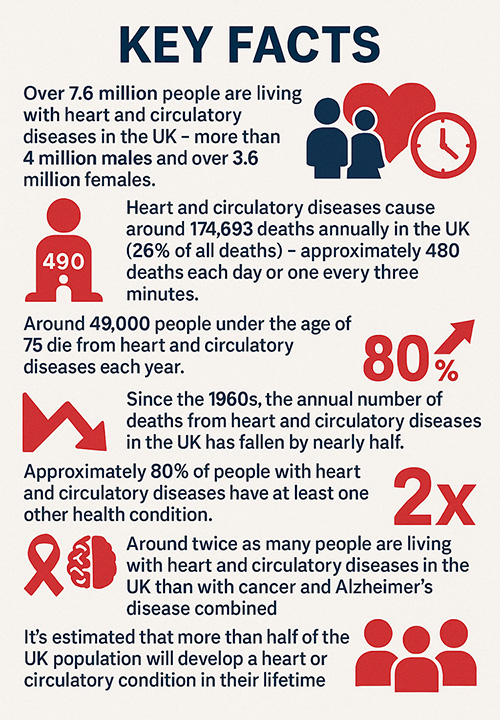
- Over 8 million people are living with heart and circulatory diseases in the UK – over 4 million males and over 4 million females (BHF analysis of Global Burden of Disease estimates for the UK, 2023, published November 2025).
- Heart and circulatory diseases cause around 170,000 deaths a year in the UK (26% of all deaths) – an average of 460 deaths each day, or one every three minutes. The recorded UK total for 2024 was 169,205.
- Around 47,000 people under the age of 75 die from heart and circulatory diseases each year (47,257 in 2024).
- Since 1961, the annual number of deaths from heart and circulatory diseases in the UK has fallen by nearly half, and the age-standardised death rate has fallen by three quarters. In 1961 more than half of all UK deaths were attributed to cardiovascular disease (320,000 deaths).
- Approximately 80% of people with heart and circulatory diseases have at least one other health condition.
- Around twice as many people are living with heart and circulatory diseases in the UK than with cancer and Alzheimer’s disease combined.
- It’s estimated that more than half of the UK population will develop a heart or circulatory condition in their lifetime.
- Due to an ageing and growing population and improved survival rates, BHF forecasts up to 1 million more people living with heart and circulatory diseases in the UK by 2030, and up to 2 million more than today by 2040.
Today in the UK
Each day in the UK, strokes are among the most common and serious of these events; see our guide to first aid for stroke:
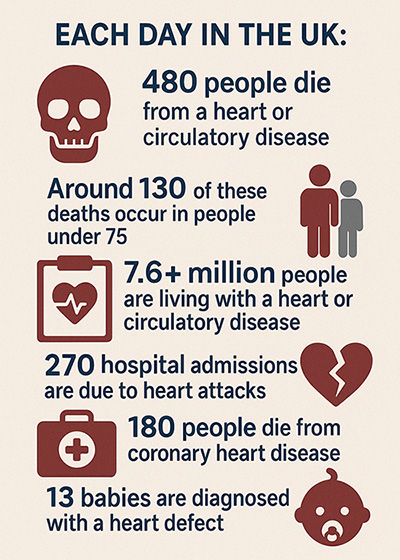
- 460 people die from a heart or circulatory disease
- Around 130 of these deaths occur in people under 75
- 8+ million people are living with a heart or circulatory disease
- 270 hospital admissions are due to heart attacks
- 170 people die from coronary heart disease
- 13 babies are diagnosed with a heart defect
The Economic Impact
- Healthcare costs relating to heart and circulatory diseases are estimated at £12 billion each year.
- The total cost to the UK economy (including premature death, long-term care, disability and informal costs) is estimated to be £29 billion each year.
Regional Variations
- Early deaths from heart and circulatory diseases (before the age of 75) are highest in the north of England, central Scotland and the south of Wales, and lowest in the south of England.
- The premature CVD death rate for Blackpool in Lancashire, England (136 per 100,000 people, 2022/24) is more than three times that of Wealden in East Sussex, England (43 per 100,000).
Top Five UK Areas for Premature Heart & Circulatory Disease Death Rates (2022–24)
| Local Authority | Location | Under 75 Death Rate per 100,000 | Under 75 Annual Number of CVD Deaths |
|---|---|---|---|
| Blackpool | North West England | 136.1 | 183 |
| Glasgow City | Scotland | 132.7 | 649 |
| Kingston Upon Hull | Yorkshire & Humber | 125.3 | 270 |
| North Lanarkshire | Scotland | 124.5 | 401 |
| East Ayrshire | Scotland | 121.5 | 151 |
Coronary Heart Disease Statistics (CHD)
Coronary heart disease is the most commonly diagnosed heart condition. It occurs when coronary arteries become narrowed by atheroma build-up, causing angina or, if blocked, heart attacks.
Key Facts
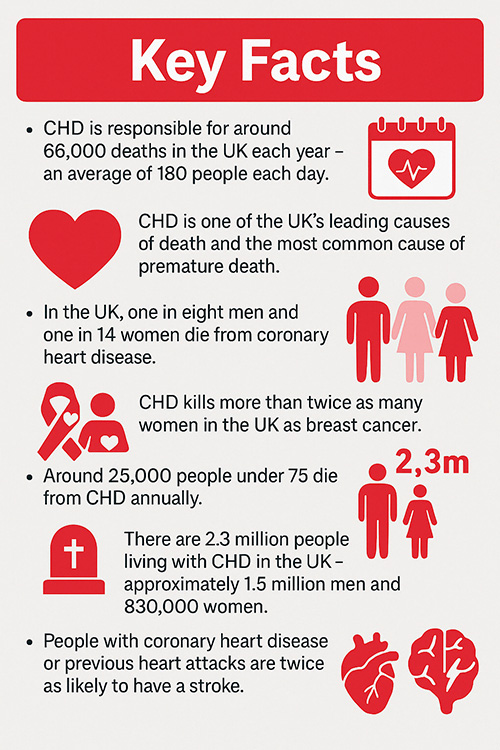
- CHD is responsible for around 63,000 deaths in the UK each year – an average of 170 people each day, or one death every eight minutes.
- CHD is one of the UK’s leading causes of death and the leading cause of premature death (before the age of 75).
- In the UK, one in eight men (the single biggest male killer) and one in 15 women die from coronary heart disease.
- CHD kills around twice as many women in the UK as breast cancer, and kills more women prematurely.
- Around 24,000 people under 75 die from CHD annually.
- There are 2.3 million people living with CHD in the UK – around 1.5 million men and more than 800,000 women.
- Around 90% of the CHD burden in the UK is associated with modifiable risk factors, which are often preventable.
- People with coronary heart disease or previous heart attacks are twice as likely to have a stroke.
Heart Attack Statistics (Myocardial Infarction)
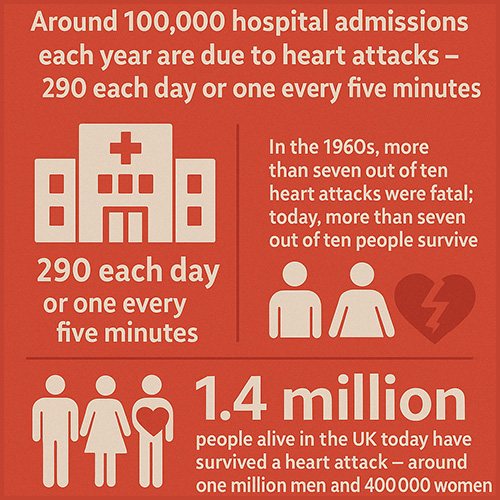
- Around 100,000 hospital admissions each year are due to heart attacks – 270 each day or one every five minutes.
- In the 1960s, more than seven out of ten heart attacks were fatal; today, more than seven out of ten people survive.
- An estimated 1.4 million people alive in the UK today have survived a heart attack – around one million men and 400,000 women.
Atrial Fibrillation Statistics (AF)
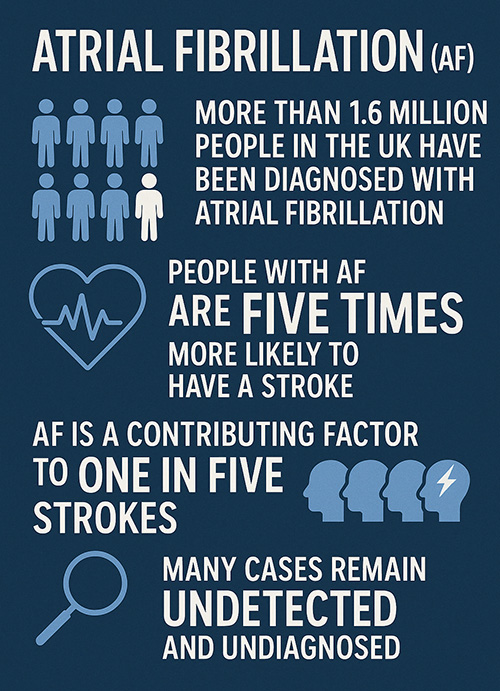
- Around 1.7 million people in the UK have been diagnosed with atrial fibrillation, but a significant proportion are not treated effectively.
- People with AF are up to five times more likely to have a stroke if their risk is not managed effectively.
- AF is a contributing factor to one in five strokes.
- Many cases remain undetected and undiagnosed.
Heart Failure Statistics
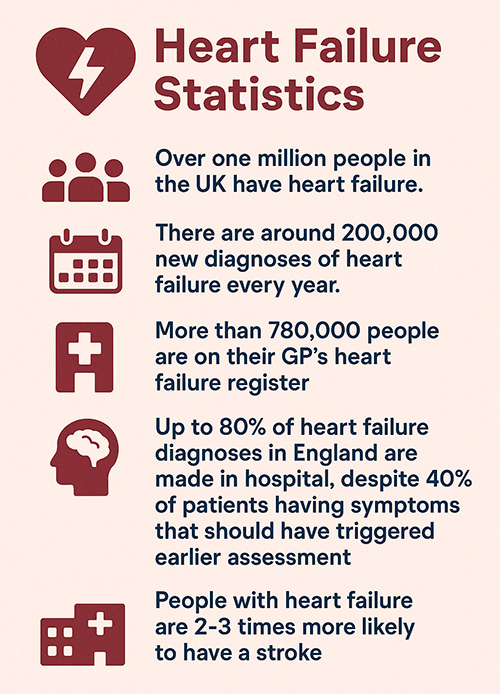
- Over one million people in the UK have heart failure.
- There are at least 200,000 new diagnoses of heart failure every year.
- More than 820,000 people are on their GP’s heart failure register.
- Up to 80% of heart failure diagnoses in England are made in hospital, despite 40% of patients having symptoms that should have triggered earlier assessment.
- People with heart failure are 2-3 times more likely to have a stroke.
Stroke Statistics
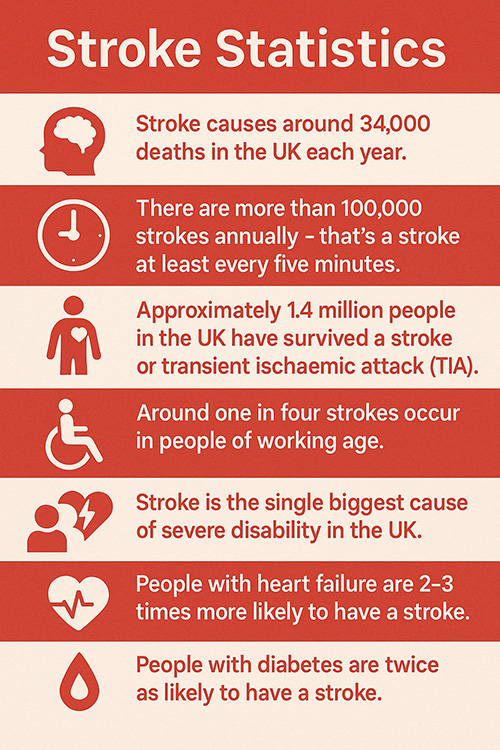
- Stroke causes around 34,000 deaths in the UK each year.
- There are more than 100,000 strokes annually – that’s a stroke at least every five minutes.
- At least 1.5 million people in the UK have survived a stroke or transient ischaemic attack (TIA).
- Around one in four strokes occur in people of working age.
- Stroke is the single biggest cause of severe disability in the UK.
- People with heart failure are 2-3 times more likely to have a stroke.
- People with diabetes are up to four times more likely to be admitted to hospital with a stroke.
Vascular Dementia Statistics
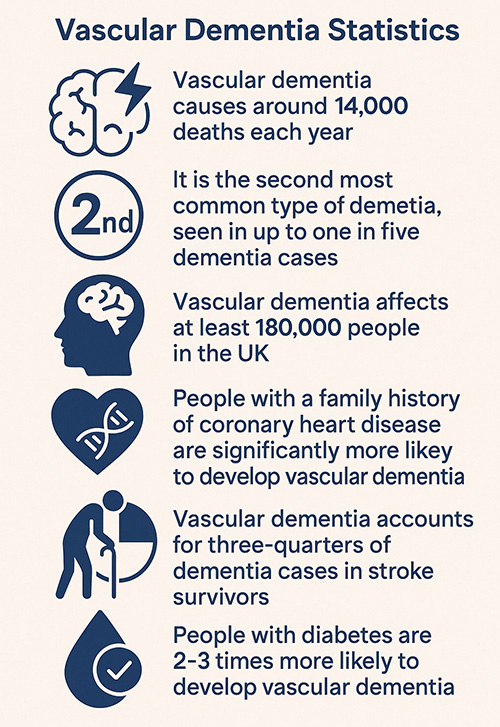
- Vascular dementia causes around 14,000 deaths each year.
- It is the second most common type of dementia, seen in at least one in five dementia cases.
- Vascular dementia affects at least 180,000 people in the UK.
- People with a family history of coronary heart disease are significantly more likely to develop vascular dementia.
- Vascular dementia accounts for three-quarters of dementia cases in stroke survivors.
- People with diabetes are 2-3 times more likely to develop vascular dementia.
Out-of-Hospital Cardiac Arrest Statistics
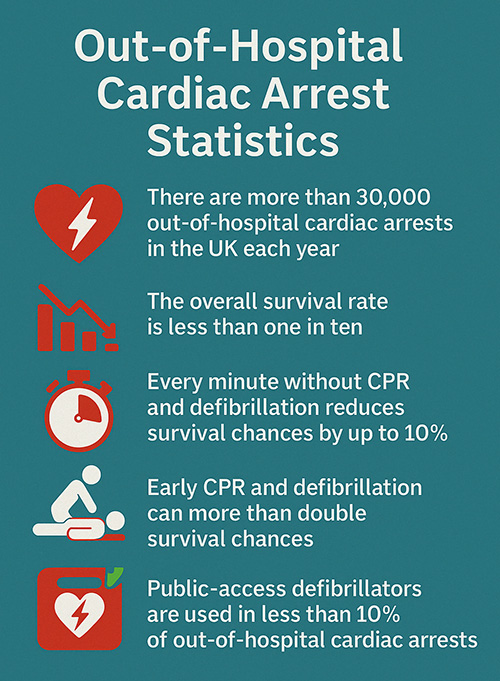
- There are more than 40,000 out-of-hospital cardiac arrests in the UK each year.
- The overall survival rate is less than one in ten.
- Every minute without CPR and defibrillation reduces survival chances by up to 10%.
- Early CPR and defibrillation can more than double survival chances. Knowing the proper placement of defib pads helps responders act quickly and effectively.
- Public-access defibrillators are used in less than 10% of out-of-hospital cardiac arrests. Wider availability depends on funding, so many communities run defibrillator fundraising campaigns.
Congenital Heart Disease Statistics
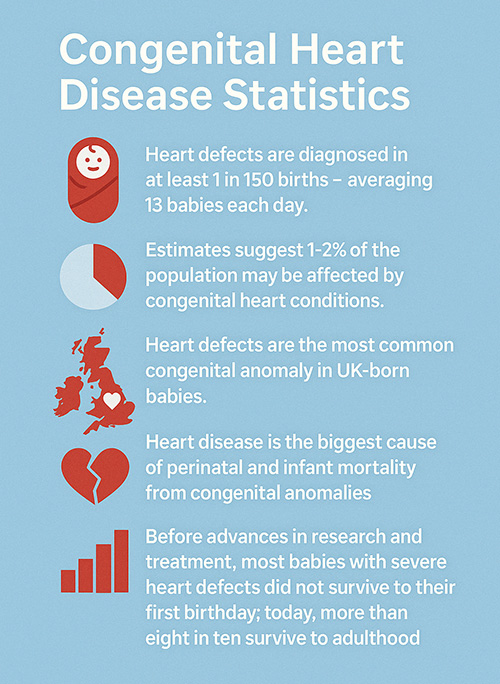
- Heart defects are diagnosed in at least 1 in 150 births – averaging 13 babies each day.
- Estimates suggest 1-2% of the population may be affected by congenital heart conditions.
- Heart defects are the most common congenital anomaly in UK-born babies.
- Heart disease is the biggest cause of perinatal and infant mortality from congenital anomalies.
- Before advances in research and treatment, most babies with severe heart defects did not survive to their first birthday; today, more than eight in ten survive to adulthood.
Inherited (Genetic) Heart Conditions Statistics
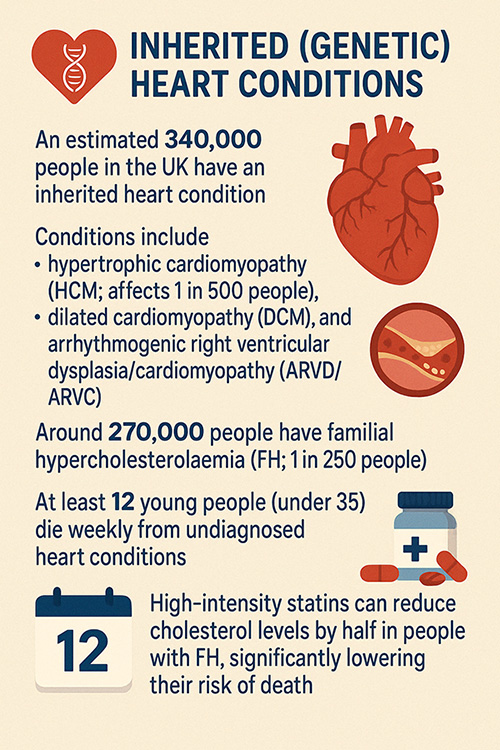
- An estimated 340,000 people in the UK have an inherited heart condition.
- Conditions include hypertrophic cardiomyopathy (HCM; affects 1 in 500 people), dilated cardiomyopathy (DCM) and arrhythmogenic cardiomyopathy (ACM).
- Around 270,000 people have familial hypercholesterolaemia (FH; 1 in 250 people).
- At least 12 young people (under 35) die weekly from undiagnosed heart conditions.
- High-intensity statins can reduce cholesterol levels by half in people with FH, significantly lowering their risk of death.
Risk Factors
High Blood Pressure (Hypertension)
- High blood pressure is the leading modifiable risk factor for heart and circulatory disease in the UK, and is linked to around 80,000 cardiovascular deaths each year.
- Approximately 30% of UK adults (around 16 million) have high blood pressure – up to half are not receiving effective treatment.
- More than 11 million people have been diagnosed with high blood pressure by their GP – meaning up to 5 million adults could be undiagnosed.
- In total, up to 8 million people are living with undiagnosed or uncontrolled high blood pressure.
- Around 50% of heart attacks and strokes are associated with high blood pressure.
Diabetes
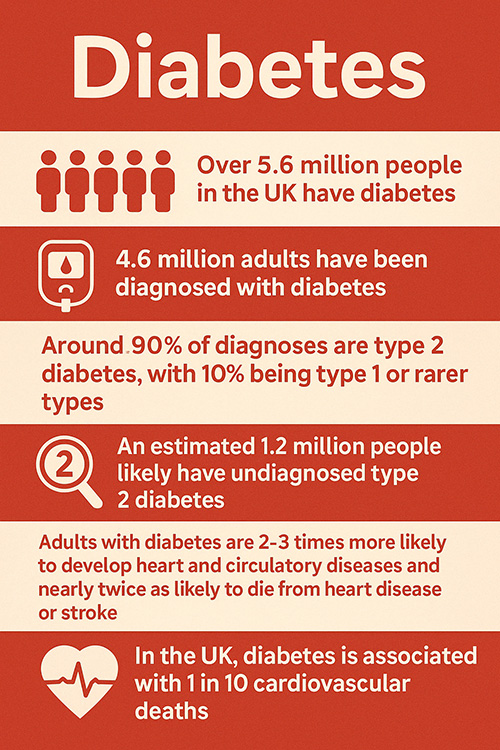
- Nearly 6 million people in the UK have diabetes.
- Around 4.8 million adults have been diagnosed with diabetes.
- Around 90% of diagnoses are type 2 diabetes, with 10% being type 1 or rarer types.
- As many as 1.3 million people are likely to have undiagnosed type 2 diabetes.
- Adults with diabetes are 3-5 times more likely to have a cardiovascular hospital admission, and 3-5 times more likely to die from heart and circulatory disease, than people without diabetes.
- An estimated 29% of people in the UK with heart failure also have diabetes, rising to 37% of those admitted to hospital.
- In the UK, diabetes is associated with 1 in 10 cardiovascular deaths.
High Cholesterol
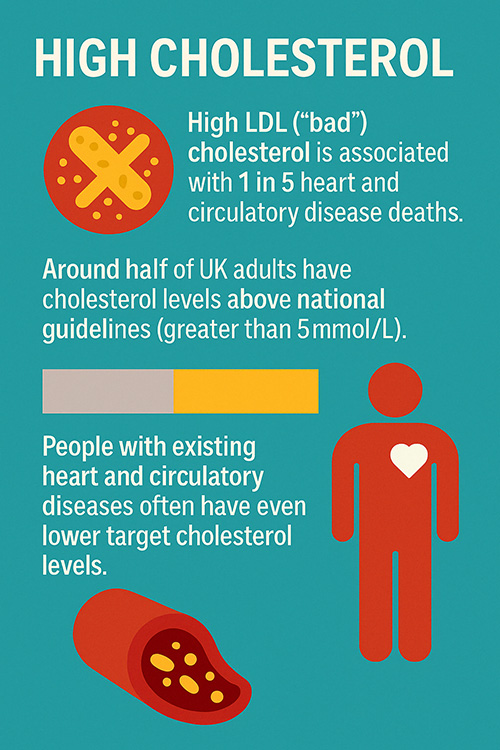
- High LDL (“bad”) cholesterol is associated with 1 in 5 heart and circulatory disease deaths.
- Around half of UK adults have cholesterol levels above national guidelines (greater than 5mmol/L).
- People with existing heart and circulatory diseases often have even lower target cholesterol levels.
Other Significant Risk Factors
Air Pollution
- At least 9,000 heart and circulatory disease deaths in the UK each year are attributable to particulate matter pollution (Global Burden of Disease 2025, UK estimates for 2023). An earlier WHO estimate of 14,000 rested on 2019 data and that dataset has been retired.
Smoking
- Around 1 in 8 adults in the UK smoke cigarettes – that is 6-7 million adults.
- At least 80,000 deaths each year are attributed to smoking-related causes.
- As many as 18,000 heart and circulatory disease deaths each year can be attributed to smoking.
Overweight & Obesity
- Around 30% of UK adults have obesity, and more than one in three (36%) have a BMI defined as overweight.
- More than one in four UK children (26%) have a BMI defined as overweight or obese.
- In the UK, around 1 in 9 heart and circulatory disease deaths are associated with a high body mass index – over 21,000 each year.
Diet & Exercise
- Only about 30% of adults consume the recommended minimum five portions of fruit and vegetables daily.
- Around 25% of adults exceed national guidelines for weekly alcohol intake.
- Around one in three (32%) of UK adults do not achieve recommended physical activity levels (150 minutes of moderate intensity activity weekly, or 75 minutes of vigorous activity).
- Being physically active can reduce heart and circulatory disease risk by up to 35%.
Additional Risk Factors
- Ageing
- Biological sex and gender
- Ethnicity
- Family history
- Impaired kidney function – chronic kidney disease is associated with around 1 in 10 heart and circulatory disease deaths, and an estimated 7.2 million people in the UK live with CKD, around 2.8 million of them at stage 3 or higher
- COVID-19
- Serious mental illness (psychosis, schizophrenia, bipolar affective disorder)
- Sub-optimal temperature (excess cold and heat)
- Radiation and lead exposure
UK Heart and Circulatory Diseases Statistics References
Heart and Circulatory Diseases (CVD)
| Statistic | Source | Link |
|---|---|---|
| CVD deaths statistics | BHF analysis of ONS Nomis, NRS and NISRA 2024 mortality data | ONS Mortality Data |
| People living with CVD | BHF analysis of Global Burden of Disease (GBD) estimates for the UK 2023, published November 2025 | NHS Digital QOF Data |
| CVD prevalence projections | BHF (2024) UK forecasts based on ONS population projections | ONS Population Projections |
| CVD vs cancer/Alzheimer’s | Macmillan Cancer Support and Alzheimer’s Society | Macmillan Statistics, Alzheimer’s Society |
| Economic cost of CVD | Shih (2025) Economic Burden of Cardiovascular Disease in the UK, 2021/22 estimates (European Heart Journal – Quality of Care & Clinical Outcomes) | BHF Economic Cost Analysis |
| Comorbidity patterns | Tran J, et al. (2018) “Patterns and temporal trends of comorbidity among adult patients with incident cardiovascular disease in the UK” | PLoS Med. 15(3):e1002513 |
Coronary Heart Disease (CHD)
| Statistic | Source | Link |
|---|---|---|
| CHD death statistics | BHF analysis of UK mortality statistics: ONS/NRS/NISRA (2024 data) | ONS Death Registrations |
| Global CHD mortality | Global Burden of Disease and WHO, 2023 and 2021 mortality estimates | WHO Cardiovascular Diseases |
| CHD death rates map | BHF analysis of OHID, ONS Nomis, NRS and NISRA 2021-23 mortality data | OHID Fingertips |
| People living with CHD | BHF analysis of QOF/QAIF/GP prevalence data to 2024/25 | NHS Digital QOF |
Heart Attack (Myocardial Infarction)
| Statistic | Source | Link |
|---|---|---|
| Hospital admissions | UK hospital statistics, 2024/25 data (NHS England, Public Health Scotland, NHS Wales, DH Northern Ireland) | NHS Digital Hospital Statistics |
| Heart attack survival rates | Myocardial infarction case fatality rates analysis | The Lancet Public Health |
| Heart attack survivors | BHF analysis of national health survey prevalence data | Health Survey for England |
Atrial Fibrillation (AF)
| Statistic | Source | Link |
|---|---|---|
| AF prevalence | BHF analysis of QOF/QAIF/GP prevalence data to 2024/25 | NHS Digital QOF |
| AF stroke risk | Marini C, et al. “Contribution atrial fibrillation to incidence and outcome of ischemic stroke” (2005) | PubMed: 15879330 |
| AF contribution to strokes | Sentinel Stroke National Audit Programme (SSNAP), national clinical audit annual results 2023-24 | SSNAP Results |
Heart Failure
| Statistic | Source | Link |
|---|---|---|
| Heart failure diagnosis | BHF analysis of QOF/QAIF/GP prevalence data to 2024/25, plus British Society for Heart Failure estimate (June 2023) | NHS Digital QOF |
| New diagnoses | Conrad N, et al. “Temporal trends and patterns in heart failure incidence” (2018) | The Lancet |
| Hospital diagnoses | Bottle et al. “Routes to diagnosis of heart failure” (2018) | Heart BMJ |
Stroke
| Statistic | Source | Link |
|---|---|---|
| Stroke deaths | BHF analysis of latest UK mortality statistics (2024 data) | ONS Death Registrations |
| Stroke incidence | Stroke Association estimate based on SSNAP audit data | Stroke Association |
| Stroke/TIA survivors | BHF analysis of QOF/QAIF/GP prevalence data to 2024/25 | NHS Digital QOF |
| Working age strokes | Stroke Association “State of the Nation: Stroke statistics” (2018) | Stroke Association Statistics |
Vascular Dementia
| Statistic | Source | Link |
|---|---|---|
| Vascular dementia deaths | BHF analysis of ONS/NRS/NISRA mortality data (2024 data) | ONS Dementia Deaths |
| Dementia types prevalence | Alzheimer’s Society UK data on dementia diagnosis | Alzheimer’s Society Dementia |
| Vascular dementia prevalence | NHS website information on vascular dementia | NHS Vascular Dementia |
Out-of-Hospital Cardiac Arrest
| Statistic | Source | Link |
|---|---|---|
| OHCA statistics | NHS England Ambulance Quality Indicators (2026) | NHS England AQI |
| Scottish OHCA data | Scottish Government (2025) Out-of-Hospital Cardiac Arrest Report to 2023/24 | Scottish Ambulance Service |
| Survival rates | Resuscitation Council UK Guidelines 2025 (training materials had to comply from January 2026) | Resuscitation Council UK |
| Registry data | University of Warwick (2025) Out-of-Hospital Cardiac Arrest Outcomes Registry Epidemiology Report (England) | OHCAO Registry |
Congenital Heart Disease
| Statistic | Source | Link |
|---|---|---|
| 1:150 babies diagnosed; ranking #1, mortality | NHS England (2024) NCARDRS congenital anomaly statistics: 2021 data ~ BHF UK estimate | NHS Digital NCARDRS |
| 1-2% prevalence | Various estimates including Hoffman & Kaplan, JACC | Science Direct Article |
| Survival comparison (pre-BHF/today) | MacMahon BMJ and British Cardiac Society | MacMahon BMJ, BCS Paper |
Inherited (Genetic) Conditions
| Statistic | Source | Link |
|---|---|---|
| 340k inherited heart conditions; 620k UK with faulty gene | BHF UK estimate derived from PHG Foundation (2009), updated with Wald et al (2016) and Tayal & Prasad (2017) | PHG Foundation |
| 1:250 with familial hypercholesterolaemia (FH) | Wald et al, NEJM 2016 | NEJM Article |
| 1:500 with hypertrophic cardiomyopathy (HCM) | Priori et al, Task Force on Sudden Cardiac Death ESC | European Heart Journal |
| Sudden cardiac deaths under-35s | Cardiac Risk in the Young, based on Papadakis et al (2009) | C-R-Y Statistics |
Risk Factors: High Blood Pressure
| Statistic | Source | Link |
|---|---|---|
| High blood pressure (hypertension) estimate | BHF analysis of UK surveys and ONS UK population estimates | Health Survey for England |
| Diagnosed hypertension (in primary care/by GP) | BHF analysis of QOF/QAIF/GP prevalence data to 2024/25 | NHS Digital QOF |
| High BP/CVD risk | Vasan et al NEJM 2001 | PubMed: 11794147 |
| Around half of heart attacks and strokes are associated with high blood pressure | Global Burden of Disease (GBD 2025) UK risk burden estimate 2023 – also the leading modifiable risk factor | GBD Study – The Lancet |
Risk Factors: Diabetes
| Statistic | Source | Link |
|---|---|---|
| 4.8m adults diagnosed with diabetes | BHF analysis of QOF/QAIF/GP prevalence data to 2024/25 | NHS Digital QOF |
| Nearly 6m estimated prevalence; 1.3m undiagnosed estimate | Diabetes UK (2025) | Diabetes UK Statistics |
| Adults with diabetes are 3-5 times more likely to have a cardiovascular hospital admission and 3-5 times more likely to die from cardiovascular disease | Multiple research studies | PubMed: 20609967, PMC Article, The Lancet |
| In the UK, one third of adults with diabetes die from a heart or circulatory disease | National Diabetes Audit (NDA) Complications & Mortality Dashboard, annual data to 2023 | National Diabetes Audit |
Risk Factors: Other
| Statistic | Source | Link |
|---|---|---|
| High Cholesterol | Health Survey for England 2024 | Health Survey for England |
| At least 9k heart and circulatory disease deaths per year attributable to particulate matter pollution | Global Burden of Disease (GBD 2025) UK estimates for 2023. The earlier WHO 2019 estimate of 14k has been retired | WHO Air Pollution |
| 80k smoking deaths; 18k+ smoking-attributable CVD deaths | BHF UK estimates based on OHID Local Tobacco Profiles | OHID Tobacco Profiles |
| Obesity, physical activity, diet statistics | BHF analysis of UK health surveys | UK Health Surveys |
| Physical inactivity risk | Office for Health Improvement & Disparities (OHID) Fingertips | OHID Physical Activity |
Become a qualified gas engineer
Our New Entrant Gas Engineer courses take you from beginner to Gas Safe registered, with hands-on training and the ACS qualifications employers look for.
Blog categories
Keep up to date with the latest news from
Skills training group.