Course overview
Delivered over a single day at our Paisley training academy, this course assesses your ability to measure ambient levels of carbon monoxide (CO) and carbon dioxide (CO₂) inside a home, and to run combustion checks on domestic gas appliances using a portable electronic flue gas analyser. It is built for working engineers who attend genuine CO incidents and need formal sign-off to act on what their instruments tell them.
The assessment follows the guidance set out in BS 7967 Parts 1 to 4. It deals strictly with domestic premises and appliances — commercial work and the formal reporting of incidents under RIDDOR fall outside its scope and are covered by separate qualifications.
Course overview
You’ll be trained and assessed across the following:
- Taking accurate ambient CO and CO₂ readings within a domestic dwelling
- Using a portable electronic combustion analyser correctly and safely
- Carrying out combustion performance checks on domestic gas appliances
- Responding to a reported CO alarm activation in a methodical way
- Investigating reports of fumes, smells or visible spillage of combustion products
- Identifying which appliance is producing unsafe products of combustion
- Interpreting readings against recognised action levels and deciding the right next steps
Why this module matters
Carbon monoxide gives no warning of its own — no colour, no smell, no taste — yet it remains a serious cause of preventable harm in UK homes every winter. An engineer who can confidently quantify CO in a property and pinpoint its source is often the person standing between a faulty appliance and a tragedy. CMDDA1 turns that responsibility into a measured, repeatable procedure.
Entry requirements
CMDDA1 builds on core gas safety competence, so you’ll need to hold a current qualification before you can sit it. To enrol you must have a valid:
- Core Domestic Gas Safety (CCN1), or
- Core LPG Gas Safety (CCLP1), or
- an accepted equivalent NVQ or QCF gas qualification
You should also be comfortable using a portable electronic combustion analyser, as the assessment is hands-on. If you’re due a wider ACS renewal at the same time, mention it when booking and we’ll line the modules up across your visit.
Initial — for engineers adding CMDDA1 to their certification for the first time, or whose previous certificate has lapsed by more than 12 months.
Re-assessment — for engineers renewing a current CMDDA1. You can sit your re-assessment up to six months before your expiry date without losing any time on your renewed certificate.
Some of our clients who trust us with their training:






Reading and reference
A course manual is provided on the day. We also recommend familiarising yourself with BS 7967 Parts 1–4 beforehand. Engineers subscribed to the Gas Safe Register British Standards service can download these documents through their account.
What do I need to bring?
- Photo ID (passport or driving licence)
- One passport-sized photograph, if not already supplied
- Copies of your existing ACS or gas certificates
If you have your own analyser you’re welcome to train on it, so you leave confident with the instrument you’ll use day to day. Loan equipment is available if you need it.
How do I book?
Call our Paisley office on 0141 889 4516 and speak to one of our team. They’ll talk through dates and availability and can take payment by debit or credit card to confirm your place. Company and multi-candidate bookings are welcome.
Where you’ll train – Paisley Training Academy
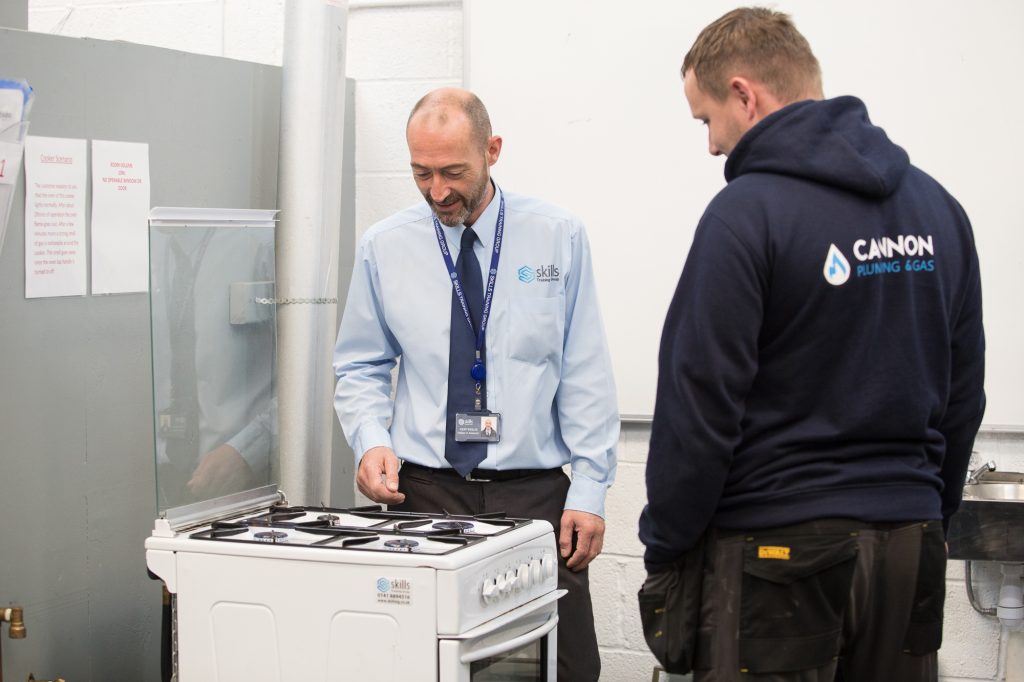
Your CMDDA1 course runs from our purpose-built academy in Paisley, just outside Glasgow. The centre is roughly a ten-minute walk from both Paisley Gilmour Street and Paisley St James stations, and only a five-minute drive from Glasgow Airport — handy for engineers travelling in from across the central belt and beyond. Free on-site parking is available, and the workshop is fitted out with live domestic appliances so your assessment reflects the real properties you visit.
Frequently Asked Questions
What does CMDDA1 actually qualify me to do?
It confirms you are competent to measure ambient carbon monoxide and carbon dioxide inside a domestic property and to use a combustion analyser to determine which appliance is producing unsafe products of combustion. In practice it's the qualification behind responding properly to a CO alarm activation or a report of fumes in a home.
Do I need any qualifications before I enrol?
Yes. You must hold a current CCN1 (Core Domestic Gas Safety) or CCLP1 (Core LPG Gas Safety), or an accepted equivalent NVQ/QCF gas qualification. If you're unsure whether your existing certificates qualify you, give our Paisley team a call and we'll check before you book.
How long does the course take and how much is it?
CMDDA1 is a one-day course at our Paisley academy. The fee is £280 + VAT per candidate. Company bookings for multiple engineers can be arranged — ask the team for details.
Does this cover commercial properties?
No. CMDDA1 is specific to domestic dwellings and domestic gas appliances. Commercial premises, commercial appliances, and the formal investigation and reporting of incidents under RIDDOR are outside its scope and require separate qualifications.
Which standard does the course follow?
The training and assessment are based on the procedures in BS 7967 Parts 1 to 4, alongside the relevant Gas Safety (Installation and Use) Regulations and HSE guidance, so you're working to current UK practice.
What signs of carbon monoxide should prompt testing?
The usual triggers are a carbon monoxide alarm sounding, an unexplained smell, visible fumes, soot or staining around an appliance, or signs that combustion products are spilling or leaking rather than venting to the flue. Any of these warrants prompt testing by a competent engineer.
Can I use my own analyser on the course?
Yes — training on your own instrument means you leave confident with the kit you use every day. If you'd rather use ours, equipment is available at the centre.
Very positive feedback from all staff who were on the training, great trainers and they made the topic interesting and easy to understand.