First Aid at Work Certificate
Our First Aid at Work Certificate is accredited by the First Aid Industry Body (FAIB), so you can rest assured you and your team are in good hands.
Modules breakdown
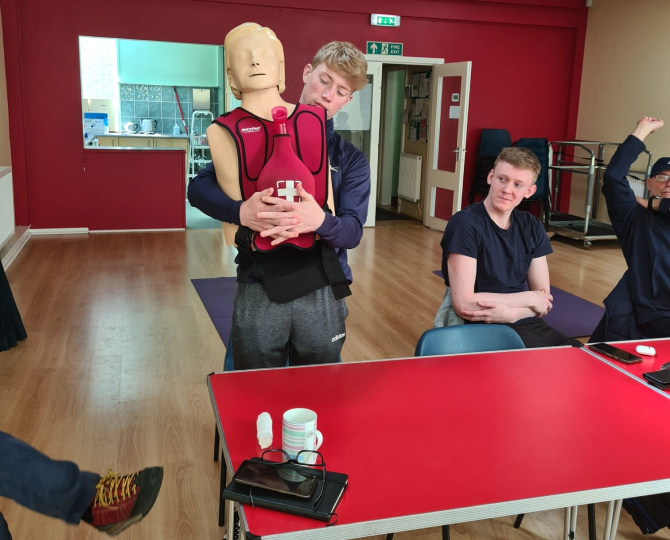
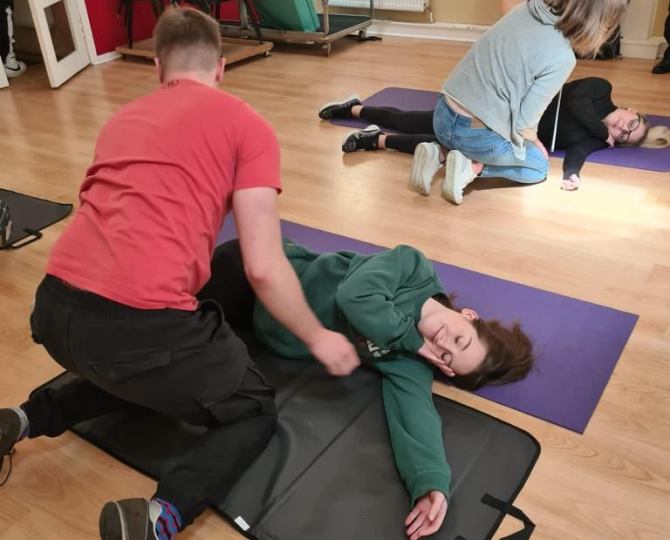
Our blended First Aid at Work course combines 6 hours of e-learning with 2 practical training days to develop workplace first aid knowledge and skills.
Some of the topics that may be covered in this course include:
- Understanding the role of a first-aider in the workplace
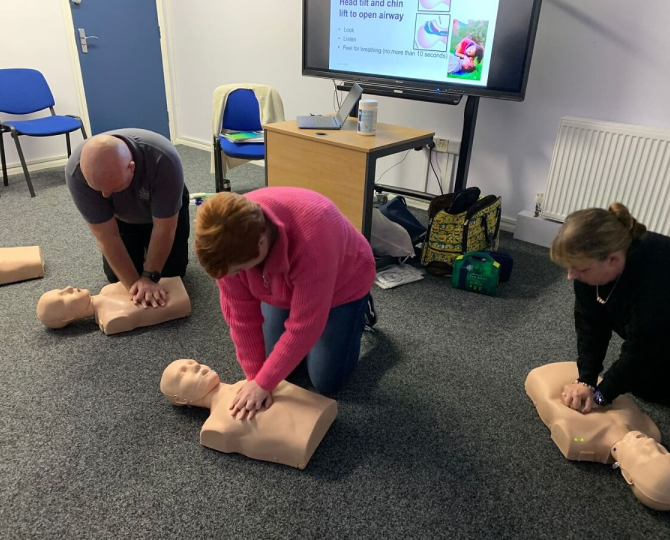
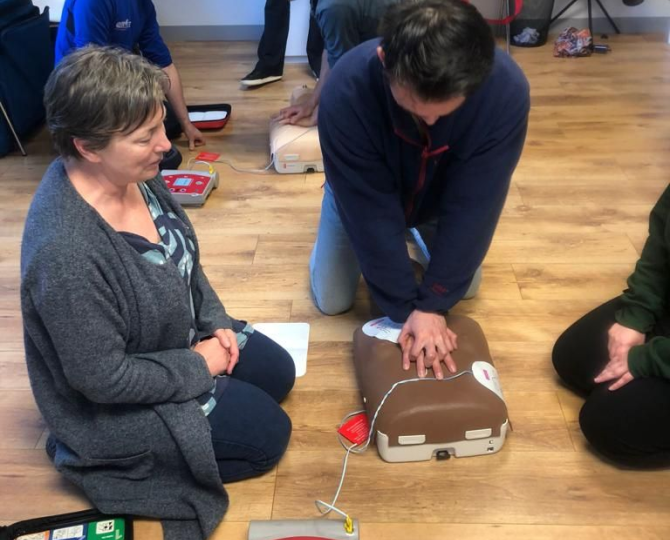
- Basic life support (bls) including cpr (cardiopulmonary resuscitation)
- Management of an unresponsive casualty
- Use of an AED (automated external defibrillator)
- Dealing with choking, bleeding, cuts, bruises, burns, shock, and other common workplace injuries
- Understanding of the principles of first aid and the importance of recording accidents and incidents
- Recognition and management of poisoning, stings, and bites
- Recognition and management of concussion, fractures, dislocations, sprains, and strains
- Understanding of the types of cardiac emergencies and how to recognize and manage them
- Recognition and management of seizures and epilepsy
- Recognition and management of diabetes and hypoglycemia
- Recognition and management of asthma and other respiratory emergencies
- Recognition and management of fainting
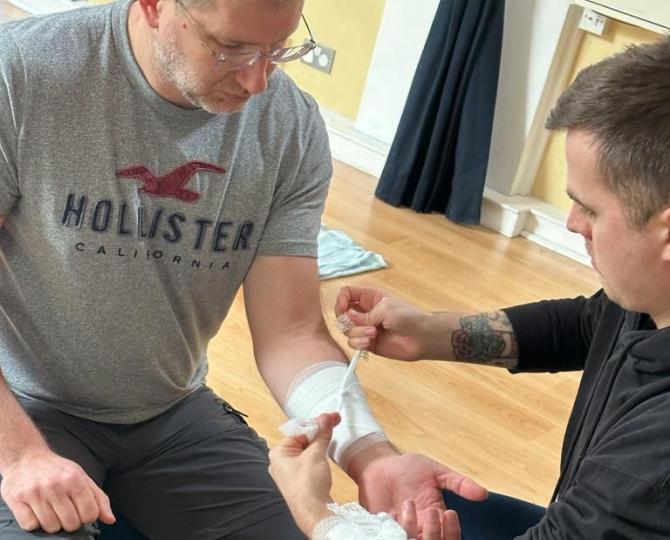
In addition, participants will learn practical skills such as bandaging, splinting, and immobilising an injured limb.
The course will also cover topics such as communication with emergency services, understanding of different types of ambulance services and their roles, and the importance of regular checks and maintenance of first aid equipment.
FAW exams and assessment
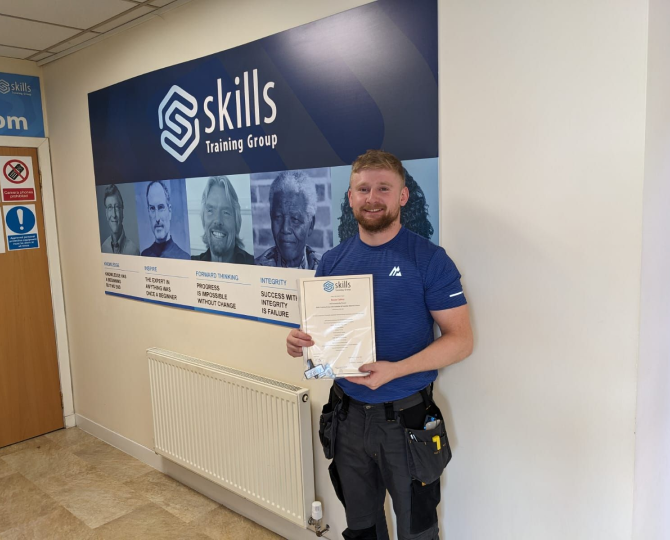
Complete the e-learning before your practical training days. Your trainer assesses your knowledge and practical skills during the course, and you will complete a final assessment. Successful learners receive an FAIB-accredited First Aid at Work certificate valid for 3 years.
Entry requirements
No previous first aid qualification is required. You need access to a suitable device and internet connection to complete the 6 hours of e-learning before the practical training days. The course includes practical assessment; contact us before booking if you need support or adjustments.
First Aid at Work Qualification
The First Aid at Work Qualifications required in the workplace will depend entirely on the level of risks your team encounters. Most office-based businesses, for instance, may not require more than EFAW qualifications. A high-risk environment, such as the construction sector, will benefit from FAW training.
Participants are assessed during the session and can receive their qualifications at the end of the training as long as they can demonstrate what they have learnt.
Course overview
Your employer’s first aid needs assessment should determine whether this is the appropriate course for your workplace.
Our blended First Aid at Work course combines 6 hours of e-learning with 2 days of practical training.
Before your first practical training day, you will complete our web-based, interactive, and user-friendly eLearning module. Learners can access the module as many times as they need to using a computer, laptop, tablet, or phone.
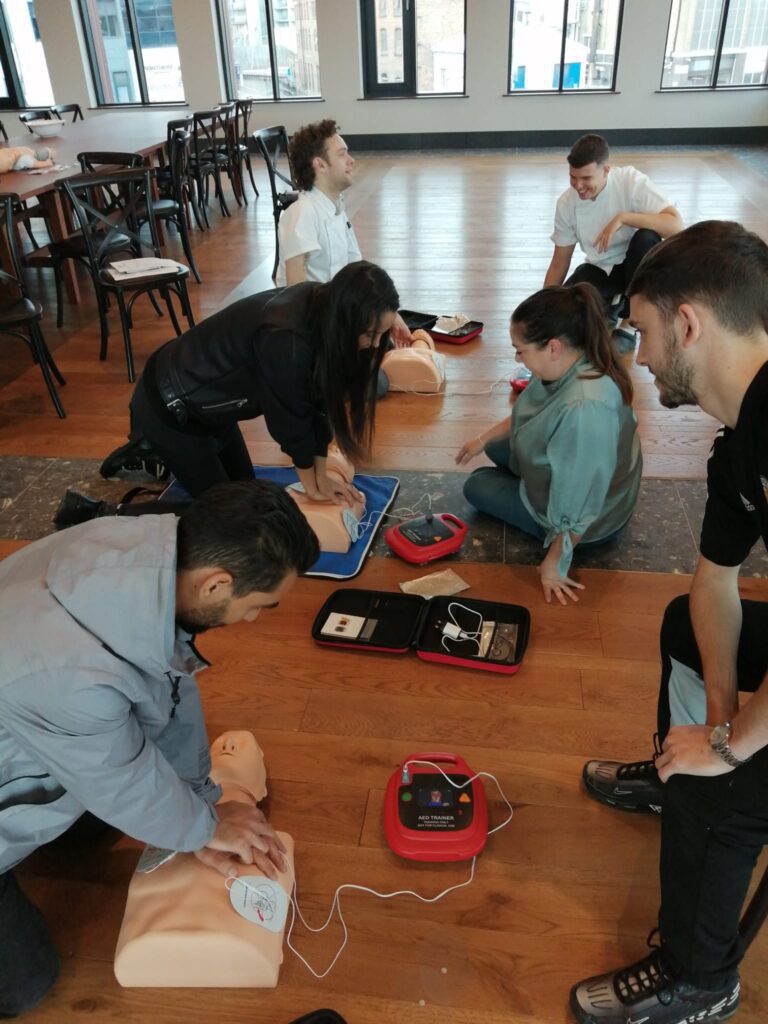
The face-to-face training takes place over 2 days and is designed to maximise recall and provide learners with the skills, knowledge, and confidence to act effectively in first aid emergencies.
Why undertake blended learning?
Online blended learning allows the learner to undertake small modules during any downtime they have at work which reduces their classroom based training to 2 days, meaning less time off work which is more efficient for employers.
The practical training days run from 09:00–16:00. Check your booking confirmation for your session details.
The FAW training syllabus covers some important general first aid topics, including:
- What are the roles and responsibilities of the first aider?
- How should incidents be recorded and reported using a reporting of injuries, diseases and dangerous occurrences regulations (riddor) form?
- What should a first aid kit contain?
- In a first aid emergency, how should you assess the situation and respond?

We also offer the Emergency First Aid at Work Course, as well as a Range of First Aid Courses.
Get a workplace first aid quote. We train at your workplace for a fixed fee, with no minimum group size.
Meet our qualified trainers

Allan King
1862 students trained
Ruth Webster
826 students trained
Bob Adam
1604 students trained
Anthony Wallace
738 students trained
Katie Campbell
1038 students trained
Andrew Mellars
642 students trained
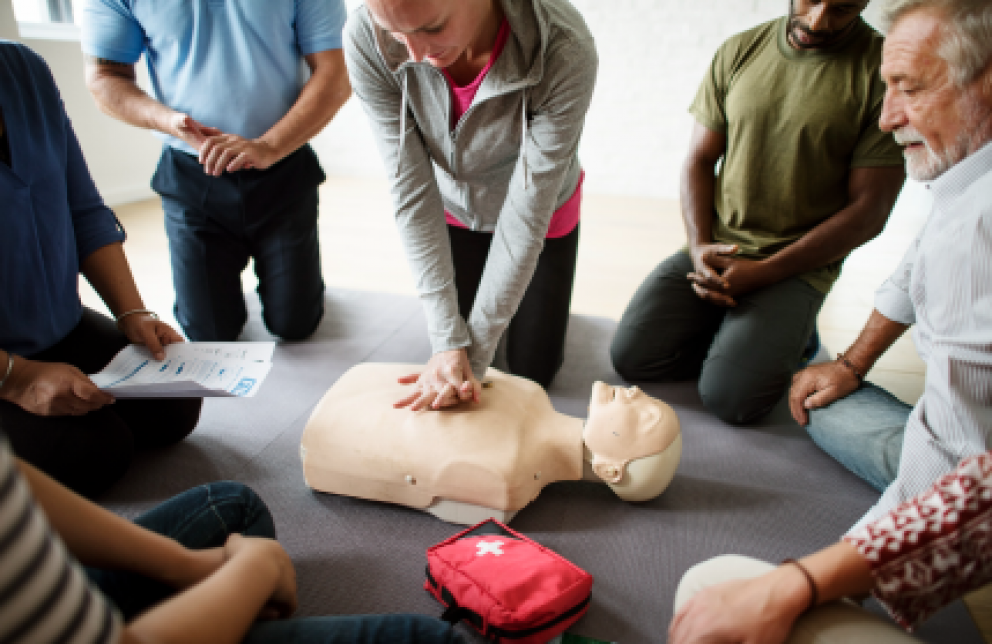
Do my employees need this course?
Your employees need the full FAW qualification if the outcome of your first aid risk assessment determines that you require first aiders with more than emergency first aid skills. For less risky business environments, you may only need your first aiders to have received the EFAW qualification.

More than 20,000 customers already trust us
Very positive feedback from all students who were on the first aid at work training, great teachers and they made the topic interesting and easy to understand.

Clients who trust us with their training






Frequently Asked Questions
How long is a first aid at work certificate valid for?
A first aid at work certificate is valid for three years and entitles the holder to act as a workplace first aider during that time. Once the certificate expires, the individual is no longer qualified to perform this role, and the employer may be in breach of their duty to provide adequate first aid provision in accordance with their risk assessment.
Despite the three-year validity period, studies show that first aid skills can deteriorate in as little as six months, a phenomenon known as "skills fade." As a result, the Health and Safety Executive (HSE) strongly advises first responders to take an annual refresher course to maintain their proficiency.
What is the difference between a first aid at work course and an emergency first aid at work course?
The first aid at work course is intended for employers who work in high-risk environments or for larger organisations with a lower level of hazard, as determined by their risk assessment.
The emergency first aid at work course covers a narrower range of first aid techniques than the first aid at work course. Employers should provide their first aiders with the first aid at work course if the risk assessment identifies that employees are at risk of specific injuries or conditions such as fractures, burns, or anaphylactic shock.
How do I become a certified first aider?
To become a certified first aider, you must complete a first aid at work or an emergency first aid at work course, which includes both theoretical and practical assessments. If a person's first aid certificate is about to expire, they can renew it by taking a requalification course.
Is it possible to fail a first aid course at work?
To work as a first aider in the workplace, one must demonstrate that they have the knowledge and skills to manage a wide range of first aid incidents. Individuals who fail to demonstrate competence in a first aid at work course will not be certified.
How often should I recertify in first aid?
A certificate for first aid at work or emergency first aid at work is valid for three years. Before the certificate expires, the first aider must attend a requalification course or redo the emergency first aid at work. However, because "skills fade," it is recommended that first responders refresh their knowledge and skills on an annual basis.
How many first aiders do I require?
There is no single ratio that applies to every workplace. Base the number and level of trained first aiders on your first aid needs assessment, including workplace hazards, workforce size, working patterns, site layout, lone working and cover for absences. Read HSE guidance on first aiders and training.
What distinguishes a first aider from an appointed person?
An appointed person is in charge of managing the first aid arrangements, which includes maintaining first aid equipment and calling emergency services in the event of an incident. They are not, however, trained to provide first aid and are only suitable for low-risk workplaces with a small workforce.
A first aider, on the other hand, is trained and assessed to provide first aid in the event of an incident.
Should my employer pay me more for being a first aider?
In the UK, employers are not legally required to pay their employees more for being a first aider. However, it is common for employers to offer additional pay or benefits to employees who undertake the role of a first aider. This may include paying for the training required to become a first aider, providing additional paid time off to attend training or carry out first aid duties, or offering a bonus or salary increase for taking on the additional responsibility.
Employers have a duty of care to their employees and must provide adequate first aid provisions in the workplace. This includes ensuring that there are enough trained first aiders available to provide immediate assistance in the event of an accident or injury.
If you are unsure whether your employer offers any additional pay or benefits for being a first aider, you should speak to your HR department or line manager for further information.
Is first aid at work a level 3?
This course leads to an FAIB-accredited First Aid at Work certificate. It is not advertised as a regulated Level 3 RQF qualification. If your employer or contract specifically requires a regulated Level 3 award, check that requirement with us before booking.
What happens if someone fails their FAW qualifications?
You must meet the course’s assessment requirements to receive a certificate. If you do not meet them, speak with your trainer or our team about the next steps. Contact us before booking if you need learning support or want to ask about reassessment arrangements.
What Are An Employer’s Responsibilities Under The First Aid At Work Legislation?
In the UK, the HSE (Health and Safety Executive) is a government agency that oversees the regulation and enforcement of health, safety, and welfare in the workplace. One of those regulations is The Health and Safety (First Aid) Regulations 1981.
The regulations are better known as the ‘First Aid at Work Legislation’. In a nutshell, the legislation details how employers have a legal obligation to ensure the immediate care of employees that get injured or become ill while they’re at work.
HSE places the onus for duty of care on the employer and requires workplaces to provide first aid care to sick and injured personnel. However, what confuses many employers is the regulations don’t stipulate what the requirements for each unique working environment are.
To that end, the employer must work out for themselves which first aid provisions they must put in place for the safety and welfare of staff. This page describes more about the First Aid at Work Legislation and what you as an employer must do.
What is the legal requirement for FAW?
As an employer, you want to ensure your staff is safe while providing services for you. To that end, you’ll no doubt be wondering how to comply with the legislation?
First of all, you need to do a thorough risk assessment across each of your sites. A risk assessment identifies how likely employees are to injure themselves during their work.
Next, you’ll need to provide at least one first aid kit to treat sick or injured staff. The legislation doesn’t specify what you should have in the kit. But, it does state the contents should treat likely injuries or illnesses sustained from the causes in your risk assessments.
Finally, you’ll need an ‘appointed person’ that is in charge of provisioning first aid care and treatment, even if your business or organisation doesn’t need a specific first-aider.
When it comes to determining your first aid kit and appointed person needs, you must take the following into account:
How many employees work at each of your sites;
Pre-existing conditions and illnesses that your employees have;
Number of visitors to each of your premises;
Typical hazards found in any workplace, not just the ones specific to yours;
HSE’s specific guidance for your business or organisation’s industry.
HSE has published a document online that you can review to learn more about the common questions surrounding first aid at work legislation.
Why is the FAW legislation so important?
The legislation is part of a series of measures put in place from the Health and Safety at Work etc Act 1974. It describes the essential aspects of first aid that all employers need to adhere to, irrespective of how small or large the business, organisation, or premises is.
As you’ve no doubt gathered by now, there were no legal workplace requirements before the HSE’s first aid regulations in 1981. Workplace injuries and illnesses are sadly commonplace, and according to HSE’s own compiled statistics for 2018 to 2019:
581,000 people sustained an injury at work;
1.4 million people experience work-related illnesses;
2,526 workers contracted mesothelioma after exposure to asbestos.
You may assume that the legislation only deals with the types of first aid equipment needed in the workplace. But, the aim of The Health and Safety (First Aid) Regulations 1981 is also to manage the provision of requirements and training for first-aiders.
Definition of ‘adequate and appropriate’ in the legislation
When you read through the legislation, you’ll come across regulation 3 which states that employers must provide ‘adequate and appropriate’ first aid equipment and facilities. You’ll come across those two words frequently in the legislation. But what exactly do they mean?
As you can appreciate, each employer’s working environment is different and comes with different sets of risks. For example, office staff will have different risks in their workplace compared to builders working on construction sites.
The legislation uses the words ‘adequate and appropriate’ because it’s up to employers to carry out risk assessments of their workplaces. And once they’ve done that, they must put in place first aid measures that match those risks.
Any unanswered questions?
Ask us anything below or request a callback, and we'll be happy to help.

5.0 rating | 231 reviews