
Understanding the importance of first aid at the workplace can be essential to prevent potential fatalities and long-term cases of disability. An increasing number of employers are offering first aid and CPR training to their employees, and appetite for it is high: a 2017 American Heart Association survey of 2,000 US employees found that more than 90 per cent would take first aid and CPR/AED training if their employer offered it. By working through the scenarios below, we can see the life-saving impact of first aid knowledge and its application in workplace emergencies.
Workplace first aid cases not only encompass physical injuries resulting from accidents but also include medical emergencies which demand immediate attention. Being prepared with first aid training can make all the difference in critical situations. The four scenarios that follow are illustrative composites, written to show how workplace first aid works in practice and how it should be done under current guidance — they are not accounts of specific named incidents. Incorporating first aid and CPR training in workplace safety policies not only enhances employees’ confidence in handling emergencies but also promotes a safety-conscious culture within the organisation.
Last reviewed: September 2026 — checked against Resuscitation Council UK Guidelines 2025.
Case Study 1: Construction Site
A construction site can be a hazardous environment, with various risks such as falls from heights, electrical hazards, and heavy machinery accidents. Implementing a proper first aid system in such an environment can significantly impact workers’ health and safety, potentially saving lives.
In one incident at a construction site, a worker suffered a severe head injury after falling from scaffolding. Quick thinking and well-trained first aid responders on site were able to control the bleeding and stabilise the victim’s condition until medical professionals arrived. This prompt and efficient response played a crucial role in preventing further complications and potentially saving the worker’s life. The HSE’s example first-aid needs assessments show how different workplaces, construction sites included, work out the first aid cover they need.
Effective first aid training can deliver positive results by addressing the following aspects:
- Fast Response: Having numerous trained responders dispersed across the construction site enables quick assistance when an incident occurs, reducing response times and potentially lessening the severity of injuries.
- Correct Techniques: Implementing well-practiced first aid procedures helps ensure that injured workers receive appropriate care, such as bandaging a wound correctly, or following the Resuscitation Council UK Guidelines 2025 sequence for an unresponsive casualty: call 999 first, then check breathing, then start CPR if the casualty is not breathing normally.
- Clear Communication: First aid responders need to relay vital information accurately to both onsite colleagues and offsite medical professionals, allowing for the best care possible in critical situations.
It is essential for construction site managers to invest in proper first aid training for their workers and ensure they maintain up-to-date skills through regular refresher courses. In this case study, effective first aid training played a vital role in mitigating the effects of a potentially life-threatening injury. By prioritising first aid and safety measures, construction sites can better protect their workers and consequently save lives.
Case Study 2: Office Environment
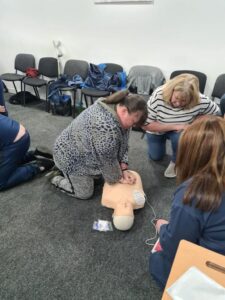
In this case study, we examine an incident in which first aid knowledge made a significant impact within an office environment. A sudden medical emergency occurred when an employee suffered a heart attack at their desk and then collapsed, unresponsive and not breathing normally — a cardiac arrest. The two are not the same thing: a heart attack is a blockage in the blood supply to the heart muscle, while a cardiac arrest is the heart stopping altogether. A heart attack can trigger a cardiac arrest, and it is cardiac arrest, not a heart attack, that calls for CPR.
Fortunately, several of the employee’s colleagues had received first aid at work training in accordance with the Health and Safety (First-Aid) Regulations 1981. One coworker recognised straight away that the employee was unresponsive, and worked to Resuscitation Council UK Guidelines 2025.
Their very first action was to call 999 — under the 2025 guidelines, 999 is called for any unresponsive person before their breathing is assessed — with the phone on speaker so the ambulance call handler could coach the room. Only then did they check for normal breathing, and finding none, they began chest compressions in the centre of the chest, 5–6 cm deep at a rate of 100–120 a minute. Another colleague fetched the automated external defibrillator (AED) available within the office building; anyone may use an AED, no training is needed, and it gives spoken instructions from the moment it is switched on.
The AED analysed the heart rhythm, delivered a shock, and staff carried on with compressions between shocks until paramedics arrived on scene. Thanks to the prompt first aid response, the employee made a full recovery and returned to work after going through a prescribed recovery period.
These series of actions showcased the importance of being equipped with first aid knowledge and understanding how to respond to medical emergencies. The combined efforts of the employees not only saved their colleague’s life but also emphasised the value of investing in first aid training for all staff members.
Case Study 3: Factory Floor
In a busy factory environment, the potential for accidents is always present. A critical incident occurred when a worker suffered a life-threatening injury on the factory floor.
An employee operating heavy machinery accidentally became entangled in the equipment, leading to severe injuries. Fortunately, one of the factory employees, who had previously completed first aid training at work, quickly recognised the situation and sprang into action.
The first responder called 999 immediately, then put their first aid training to work. The worker was conscious and talking, so the priority was the life-threatening bleeding: firm, direct pressure on the wound, while checking that the airway stayed clear and the breathing stayed normal. Communicating calmly and effectively with the injured worker, the responder controlled the bleeding and stabilised the worker’s condition while waiting for the ambulance service to arrive.
Moreover, efficient teamwork and communication were integral during the ordeal. Fellow employees cleared the area, allowing first aid to be administered without interruption. The 999 call was made without delay, and the ambulance service was given accurate information about the incident and the injured worker’s condition.
Thanks to the quick intervention and skill of the first responder, the injured worker’s life was saved. This case study highlights the significance of first aid in the workplace, providing a valuable example of how proper training and timely response can make a substantial difference during a life-threatening situation.
Case Study 4: Retail Space
In this case study, we explore an incident in a retail space where workplace first aid played a crucial role in saving a life. The staff member involved had received basic first aid training, preparing them to provide immediate and efficient treatment for various emergencies, including opening and maintaining an airway, recognising cardiac arrest and starting CPR, using a defibrillator, treating choking, and controlling life-threatening bleeding.
One day, a customer at the retail store began choking on a piece of food. Recognising the signs of choking, a trained staff member quickly intervened. They followed the current Resuscitation Council UK sequence: first encouraging the customer to keep coughing, then giving up to five back blows between the shoulder blades, then up to five abdominal thrusts, alternating the two until the food was dislodged from the customer’s airway. This prompt action ensured the customer could breathe again, ultimately saving their life.
Following the incident, the retail store management reviewed the situation and reinforced the importance of first aid training for all employees. They conducted a first-aid needs assessment to identify areas for improvement and to ensure appropriate first aid provisions were in place. The HSE publishes example first-aid needs assessments for a range of workplaces to help with exactly that.
The key takeaway from this case study is that even in a retail space, which might not be viewed as a high-risk environment, workplace first aid can prove to be a lifesaver. Ensuring that staff receive regular training and are confident in their first aid abilities can make all the difference in emergency situations.
Lessons Learned
Workplace first aid scenarios like these highlight the importance of proper training and prompt action in saving lives during emergency situations. Several key lessons can be drawn from them:
Firstly, the timely and correct administration of CPR and AED plays a crucial role in increasing the chances of survival for cardiac arrest victims. Employers should ensure that a sufficient number of staff members are trained in these life-saving techniques.
Another valuable lesson is the need for proper first aid provision at the workplace. Since the 2024 revision of HSE guidance L74, a first-aid needs assessment must also consider employees’ mental health, and the term used for major blood loss is life-threatening bleeding. The HSE’s example first-aid needs assessments show how this is done in practice. Employers must carry out a first-aid needs assessment to determine the required resources, such as first aid kits, trained personnel, and accessible AEDs, to ensure adequate emergency response capabilities.
In addition to physical resources, it is essential to foster a culture of safety and awareness among employees. This includes conducting regular training sessions, encouraging open communication regarding potential hazards, and sharing relevant case studies to reinforce the importance of first aid.
Lastly, it is vital to provide extra support for new workers, as they are more likely to be unfamiliar with the work environment and its associated risks. Implementing measures such as closer supervision, additional guidance, and a comprehensive orientation programme can greatly benefit their safety and overall well-being.
The Importance of First Aid Training
First aid training is crucial for maintaining a safe work environment. It ensures employees know how to react promptly and effectively to accidents, injuries, and medical emergencies.
One of the primary benefits of first aid training is the enhancement of workplace safety. Trained employees are more aware of potential hazards and can take necessary precautions to prevent accidents. Immediate first aid interventions can also limit the severity of injuries when they do occur, reducing the risk of long-term consequences.
First aid knowledge extends beyond just emergency situations. Workers with training can help identify early warning signs of health issues, such as heatstroke or heart attacks. As a result, they can address problems before they escalate and become critical.
The versatility of first aid training means that employees can acquire skills applicable to a wide range of medical, injury, and environmental emergencies. Courses can cover topics such as adult CPR & AED use, and HSE guidance accepts blended learning, where online theory is combined with a hands-on practical session.
Workplace first aid training not only improves overall safety but also fosters a culture of care and camaraderie among workers. When employees know they can count on their colleagues for help in emergencies, morale and productivity can also be enhanced.
Conclusion
In summary, the importance of first aid training in the workplace cannot be overstated. As numerous case studies show, well-trained employees can make a significant difference in life-threatening situations. From providing emergency life-saving support to effectively handling accidents, the impact of trained first aiders in workplace settings is invaluable.
With the availability of first aid and CPR+AED training, workplaces can ensure that employees have the skills and knowledge to respond promptly in critical situations. In a 2017 American Heart Association survey of 2,000 US employees, more than 90 per cent said they would take first aid and CPR/AED training if their employer offered it. By implementing such training, organisations can create safer environments for their staff members and contribute to the overall wellbeing of employees.
Examples from various workplaces, such as the first-aid needs assessments published by the Health and Safety Executive, show how employers work out the first aid cover they actually need. This not only increases the employees’ confidence in handling various situations but also contributes to lowering the number of severe outcomes resulting from accidents or health emergencies.
Ultimately, first aid training is an essential aspect of workplace safety. By fostering a culture of awareness and preparedness, employers can protect their employees, mitigate risks, and promote a safer working environment.
Become a qualified gas engineer
Our New Entrant Gas Engineer courses take you from beginner to Gas Safe registered, with hands-on training and the ACS qualifications employers look for.
Blog categories
Keep up to date with the latest news from
Skills training group.